Day 6: 4 Sites, One Day!
Main Page > 2026 Roamin' the Roman Lake! >
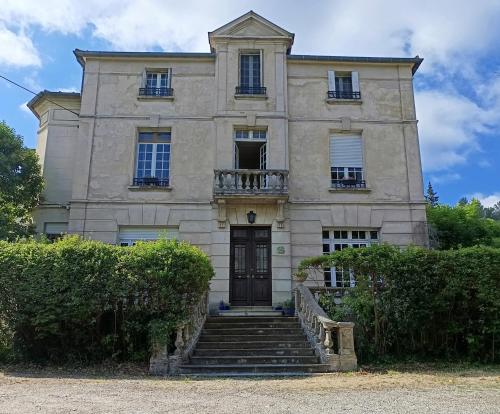
The Boys rose in their 1918 Room in the little village of Rennes-le-Chateau ready to start the day! Jacques, their very friendly innkeeper, introduced Mike and Bone to his Wife, whom had made an amazing French breakfast of local croissants and jams. They continued to talk about the extensive history of the area Rennes-le-Chateau resides in the Languedoc region of France and has mystery and history back to the fall of Rome. That history starts with the mysterious Merovingians, who were a Frankish dynasty that ruled from around the late 5th century until 751 AD, forming the first major royal line of the French kingdom. Their name comes from Merovech, a Salian Frank king whose son was Childeric I, the first well known Merovingian ruler.
The Merovingians' long hair distinguished them from other Franks, who commonly cut their hair short. Later authors referred to the early 5th century Frankish kings as the 'long-haired kings', and the Merovingians continued that tradition. A Merovingian whose hair was cut could not rule! The Merovingians also used a distinct name stock. One of their names, Clovis, evolved into Louis and remained common among French royalty down to the 19th century. Childeric I (died 481) son Clovis I (died 511) converted to Nicene Christianity, united the Franks and conquered most of Gaul ( now France). Clovis looms large in the story of Rennes-le-Chateau based on who he supposedly married, which was alleged to be the lineal descendent of the child of Jesus and Mary Magadelene. It is also alleged that “secret of the Merovingians” is a part of what the Cathars were celebrating that ruffled the Pope’s feathers. After an scintillating conversation, Mike and Bone bad Jacques and his Wife goodbye and headed the 10 miles to the little chapel that started a WHOLE bunch of noise and controversy, the Chapel of Renne-le-Chateau!!
Mike and Bone's Renne-le-Chateau B&B
After an scintillating conversation, Mike and Bone bad Jacques and his Wife goodbye and headed the 10 miles to the little chapel that started a WHOLE bunch of noise and controversy, the Chapel of Renne-le-Chateau!!
Climbing into the Village!
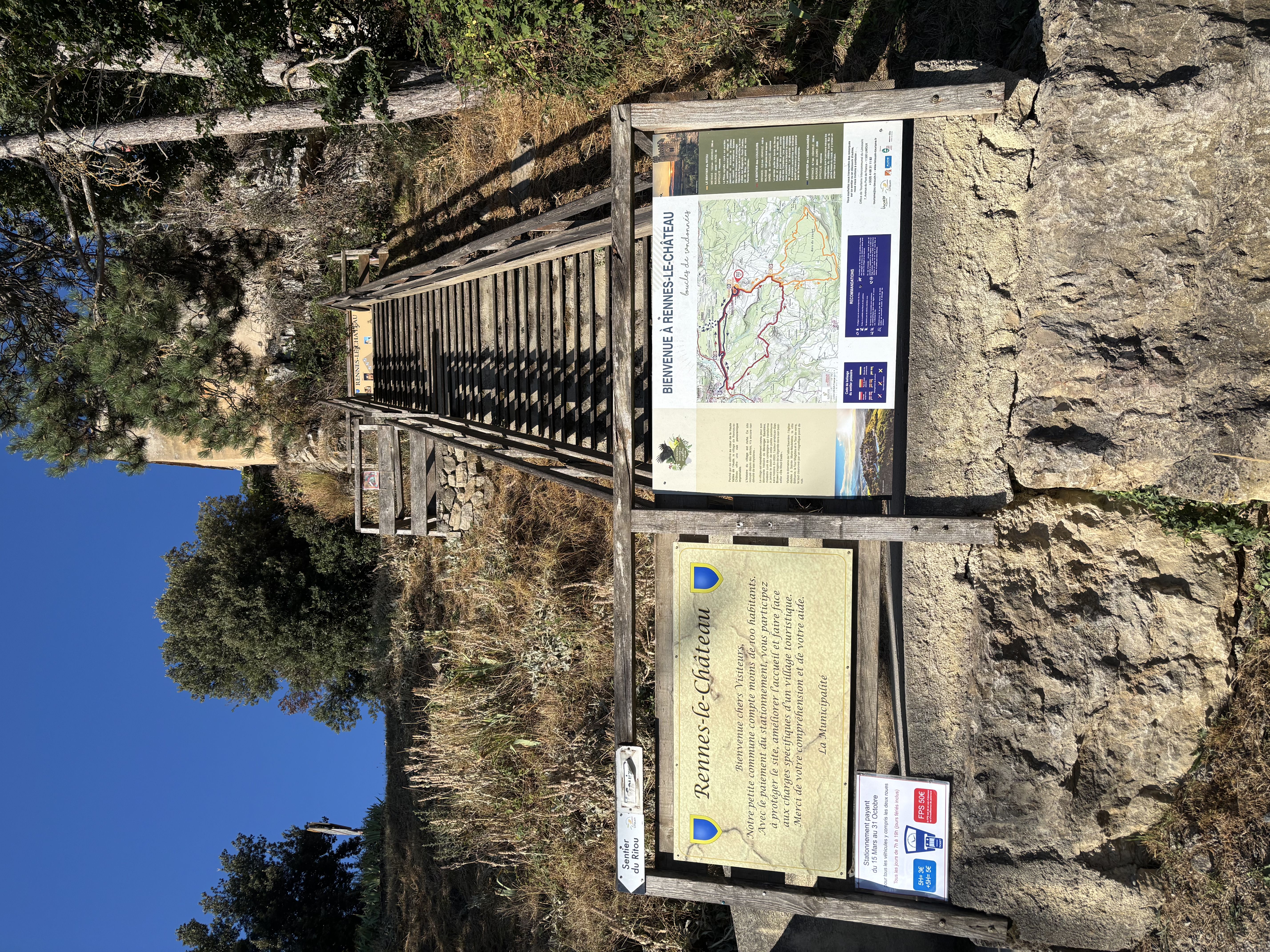
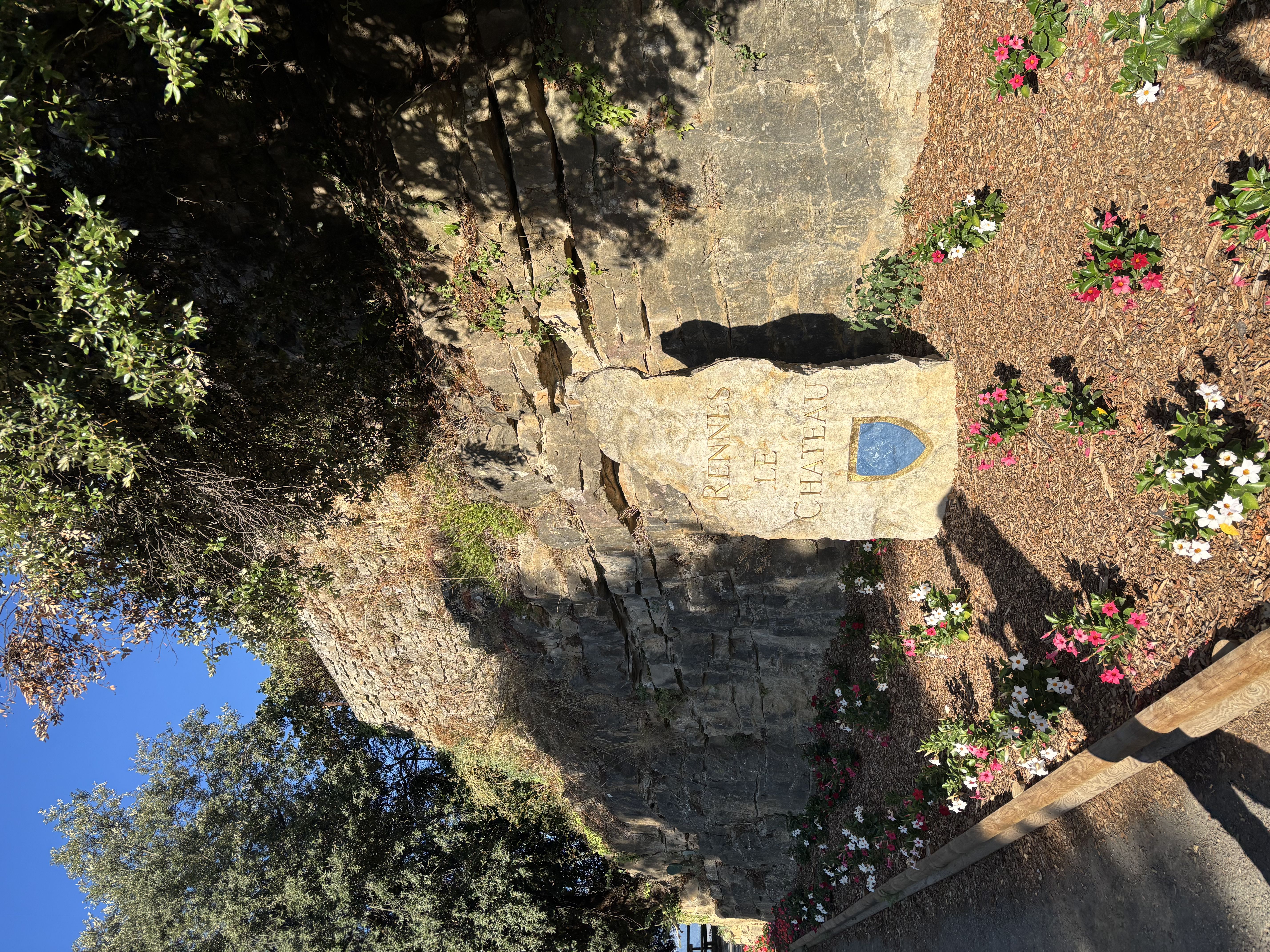
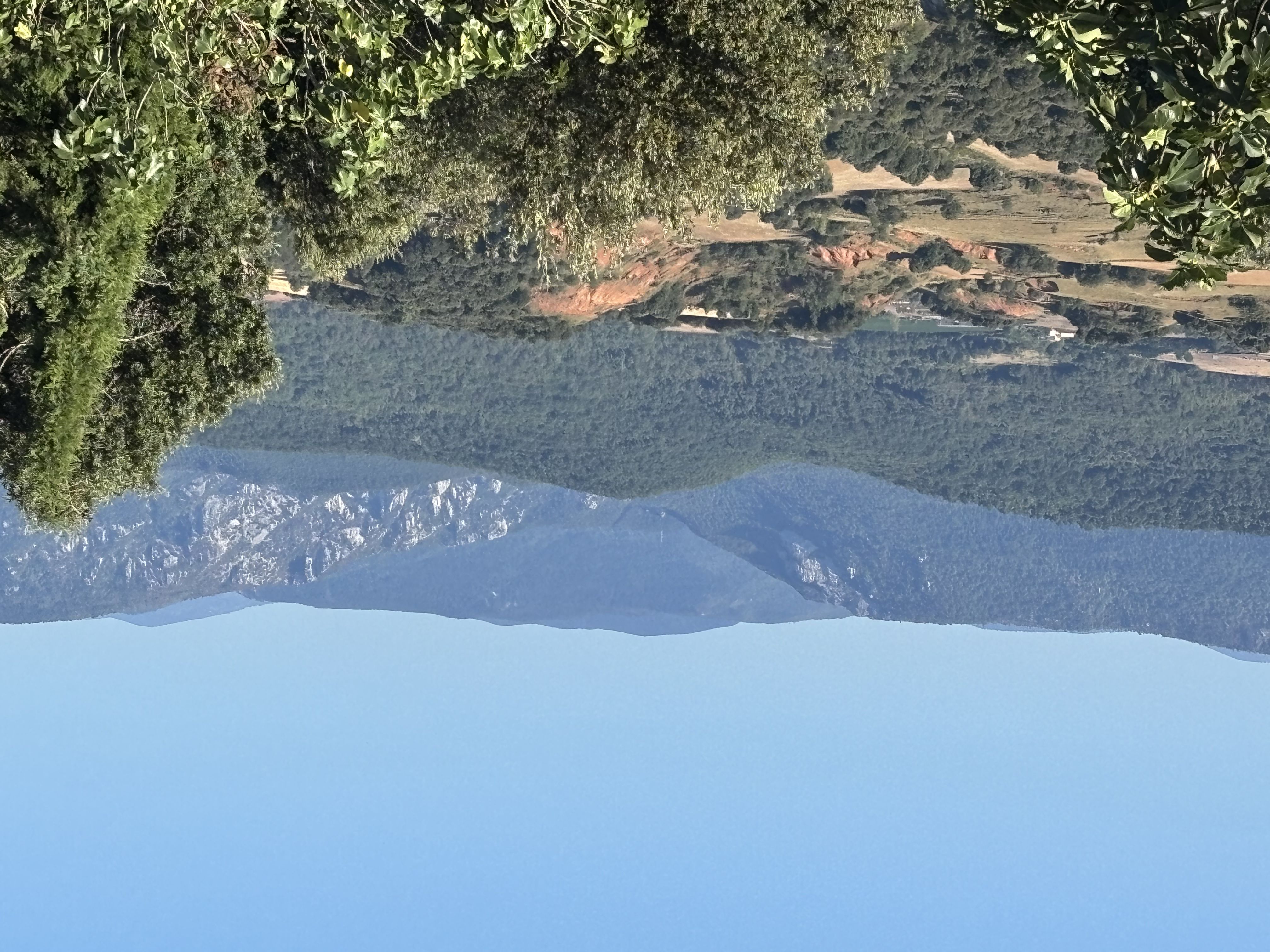
Once in the Village, Mike and Bone walked up to the mysterious Church, and Bone shared with Mike the details of Sauniere!
The mystery of Rennes-le-Château & the secrets of Abbé Saunière’s fortune
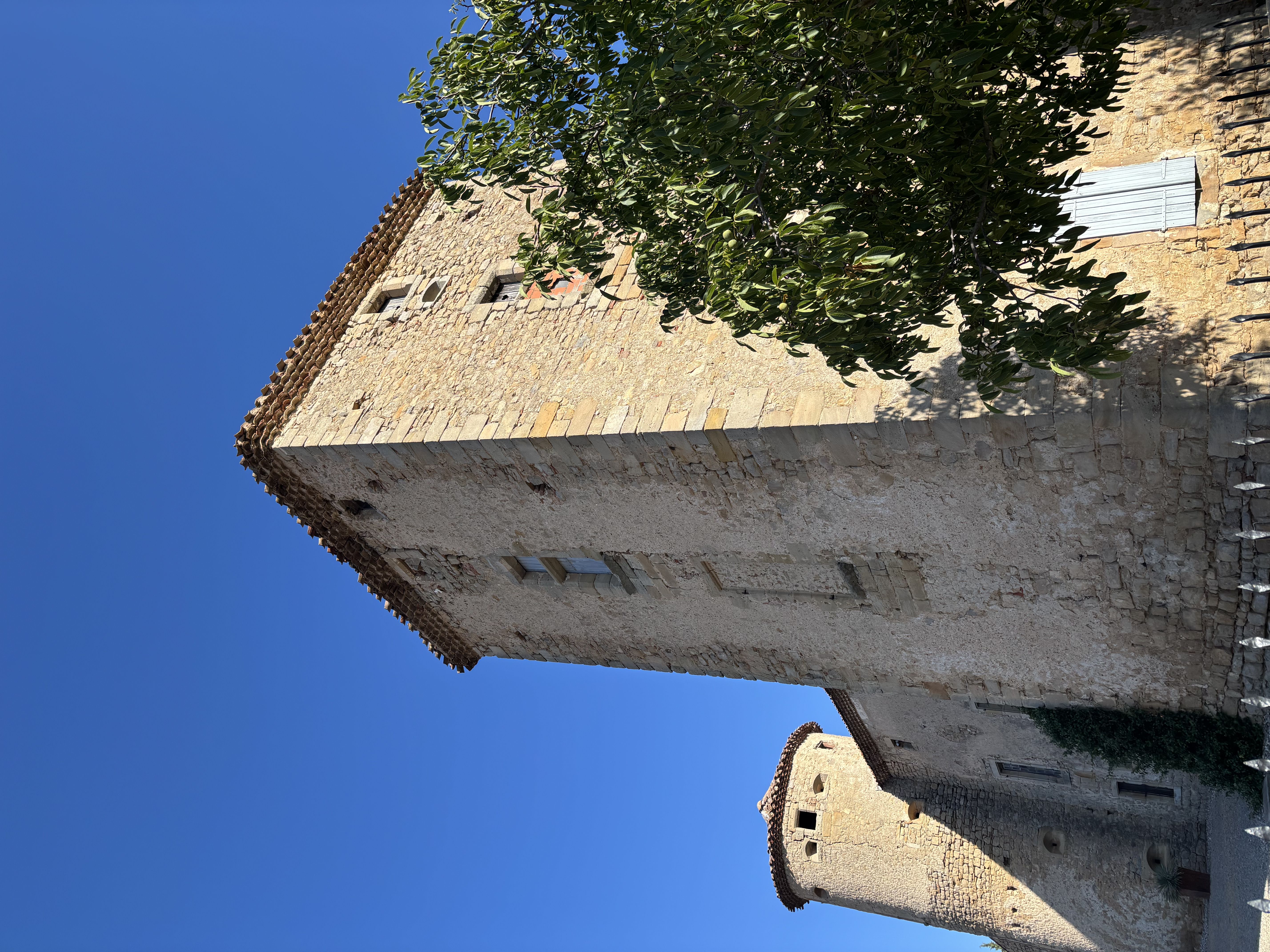
For over a hundred years, this little hilltop village of Rennes-le-Château has been the subject of fascination. Historians, treasure hunters, and conspiracy theorists alike have been drawn to its story, centered around the strange and compelling life of Abbé Bérenger Saunière. This 19th-century priest, despite having limited financial means, somehow managed to fund extravagant renovations to his church and personal estate—raising questions that have persisted for generations. In a recent study, historian Gil Galasso takes a fresh look at this long-standing mystery, attempting to strip away layers of myth and focus on what the historical record actually tells us.
The mystery of Rennes-le-Château: did Abbé Saunière discover hidden treasure or fabricate his wealth?
Saunière arrived in Rennes-le-Château in 1885 to find the village church in a serious state of decay. Within just a few years, though, he had completely transformed the site. He installed ornate decorations inside the church, built a neo-Gothic villa known as Bethania, and added well-tended gardens and striking towers. Villagers reported strange discoveries during these renovations—coins, old parchments, and possibly even crypts hidden beneath the church.
Yet, it’s not the renovations themselves that have fueled so much speculation—it’s how he paid for them. Officially, Saunière said the money came from donations he received for saying Masses. But critics have long argued that this explanation doesn’t hold up. The income from such offerings, even if generous, likely wouldn’t cover the scale of his building projects. Accusations soon followed: Saunière was said to be “trafficking” in Masses—accepting more payments than he could possibly fulfill. The Church took notice. In 1910, authorities suspended him from priestly duties and demanded he repay the funds, though he never fully cooperated.
Over time, debates about Saunière’s actions have taken two main paths. On one side are the “Concordists”—those who believe he uncovered something truly monumental. According to this group, Saunière’s church decorations and architectural choices weren’t just aesthetic—they were codes. Clues. Messages pointing to some profound religious or historical secret. Their theories connect him to everything from hidden Visigothic treasures and the Knights Templar to the supposed tomb of Mary Magdalene. They cite cryptic inscriptions, altered Christian iconography, and long-standing regional legends as evidence.
Then there are the skeptics, often called the “Deniers.” They see these stories as pure invention, spun from dubious sources and deliberate hoaxes. Historians like René Descadeillas and Jean-Jacques Bedu argue that much of the narrative was exaggerated—or outright fabricated—especially during the post-1960s wave of renewed interest, when conspiracy literature began to flourish.
Adding to the intrigue are the infamous coded parchments and esoteric symbols supposedly hidden in the church’s redesign. A statue of a devil holding a holy water font, for example, has sparked countless theories. And phrases like “By this sign you will conquer” have only added fuel to the fire, inspiring elaborate interpretations.
Making Bank (probably Euros!) the mystery of Rennes-le-Château!
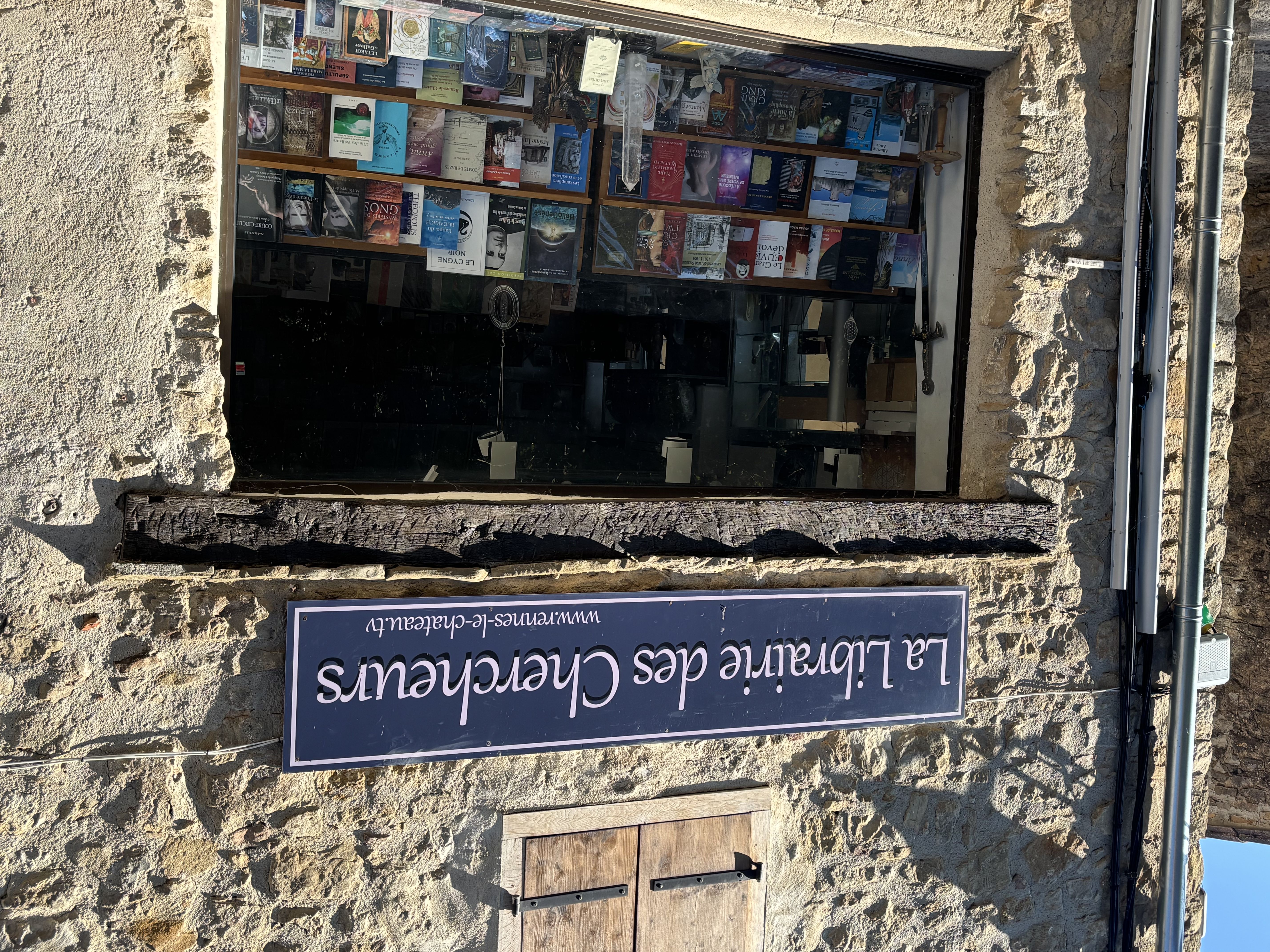
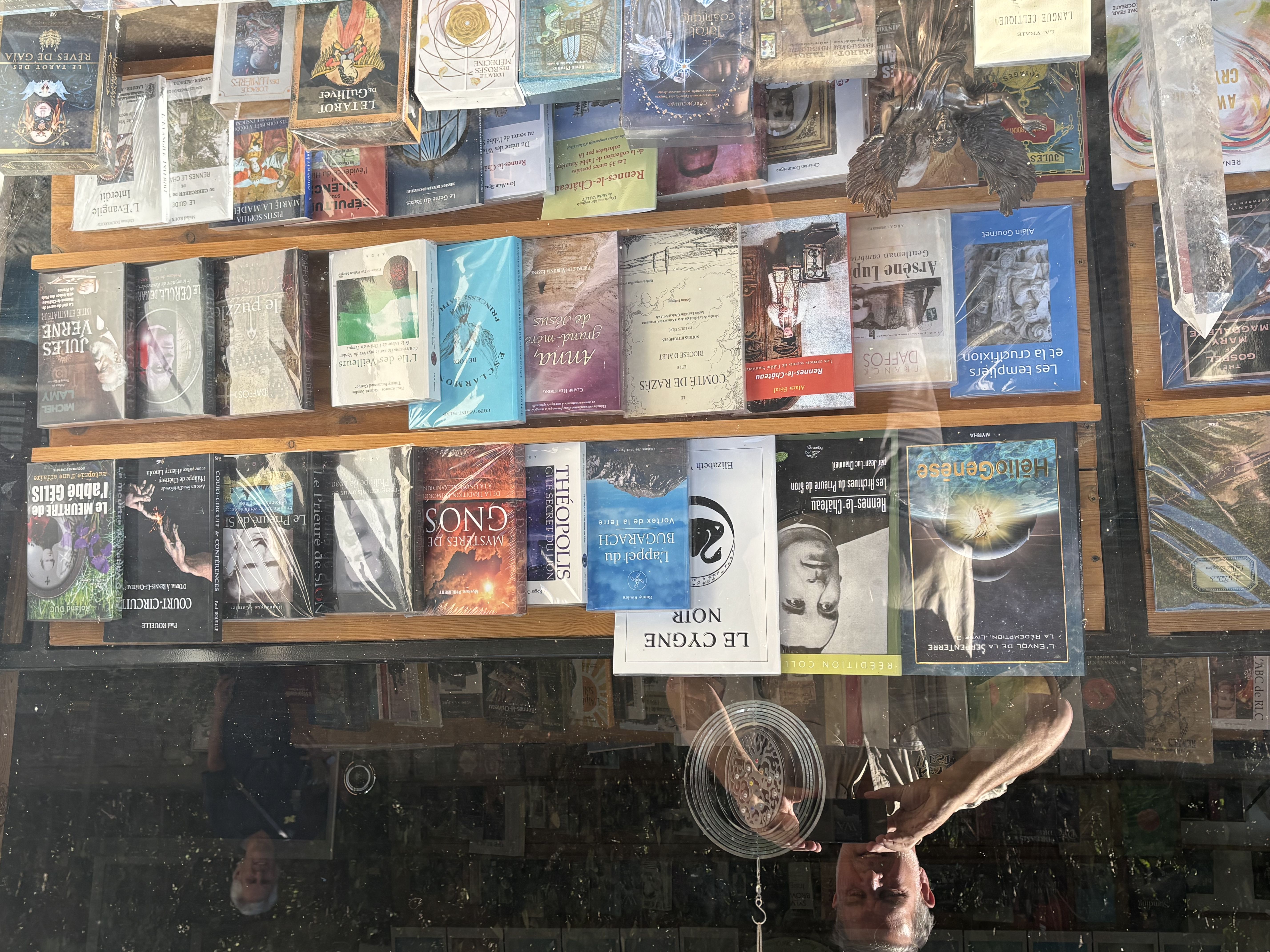
The mystery deepened with the appearance of two documents: the so-called “Small Parchment” and “Large Parchment.” These were said to contain encrypted texts tied to biblical passages and ancient secrets. Today, most researchers agree these parchments were modern forgeries—introduced into the Rennes-le-Château story by Pierre Plantard and Philippe de Chérisey, two key figures in the 20th-century revival of the legend. Still, some wonder if they were based on earlier, genuine documents. A few even suggest that Saunière may have discovered something left behind by earlier clergy, such as Antoine Bigou, who fled during the chaos of the French Revolution.
What makes the story of Rennes-le-Château so compelling is the way it blends so many different elements—folklore, speculative archaeology, theology, and fiction. While some local researchers have conducted serious archival work and collected oral histories, the broader public interest has been shaped largely by novels, pseudo-histories, and pop culture—most famously The Da Vinci Code.
And yet, even with all the embellishments and conspiracies, the mystery continues to attract attention. Recent academic efforts, like those of Galasso, aim to bring some clarity. By re-examining Saunière’s story within the context of late 19th-century France—its political climate, Church dynamics, and monarchist circles—these researchers hope to ground the legend in real history.
Whether Saunière truly unearthed a treasure, belonged to secret societies, or merely manipulated religious networks for personal gain, the world may never know for certain. But the call today is for a more balanced, evidence-based approach. Scholars like Gil Galasso argue for a respectful but critical reassessment—one that takes into account the contributions of amateurs without losing sight of what the documents and archives actually reveal. Unfortunately for Mike and Bone, the Church didn't open till 11:00, which wasted too much of the Day, so with a good back story and a few pics, Mike and Bone headed back on the tour of the Roman Mediterranean - French Style!
A Falling Out for the Cathars! (Literally!!)
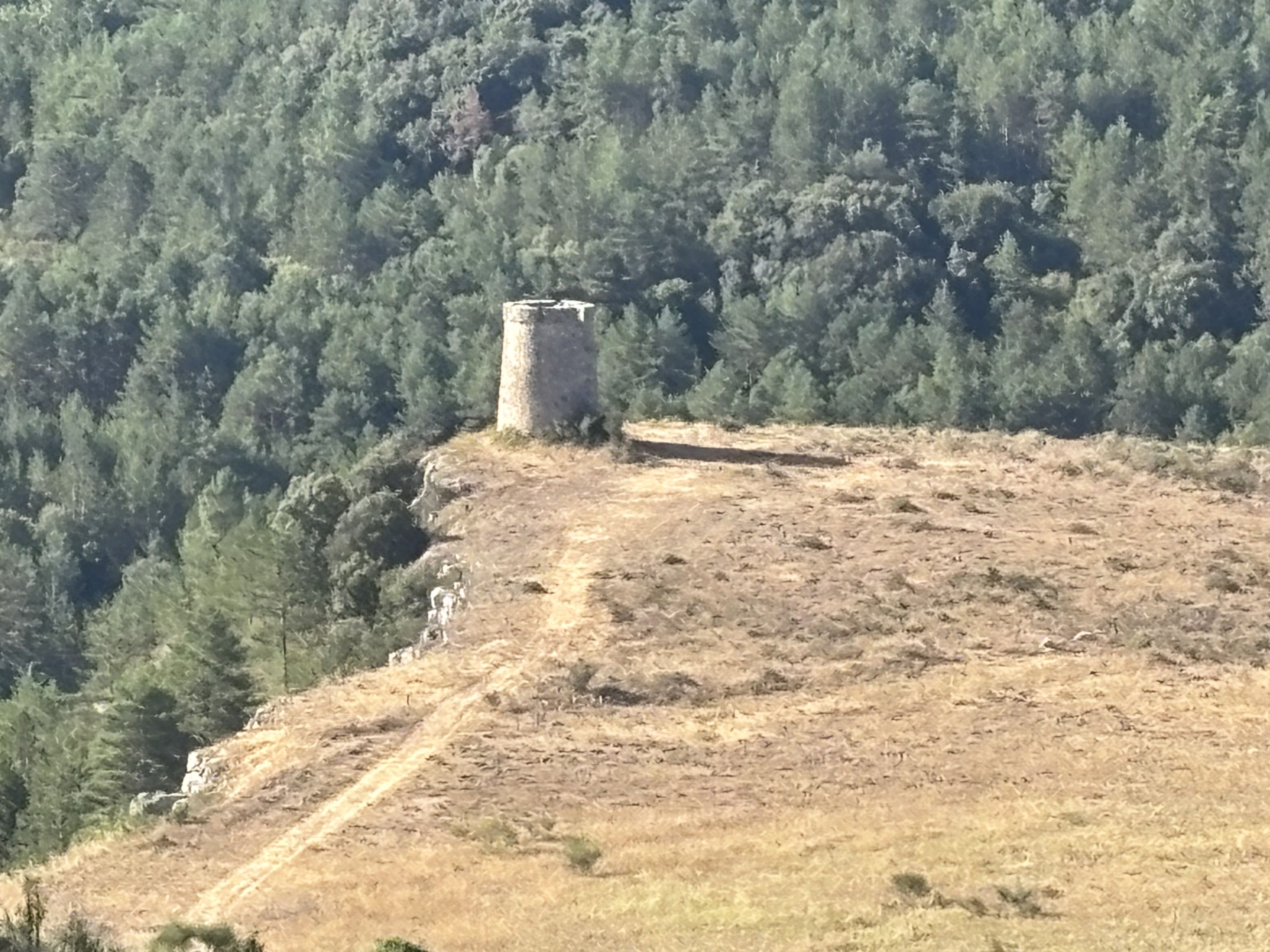
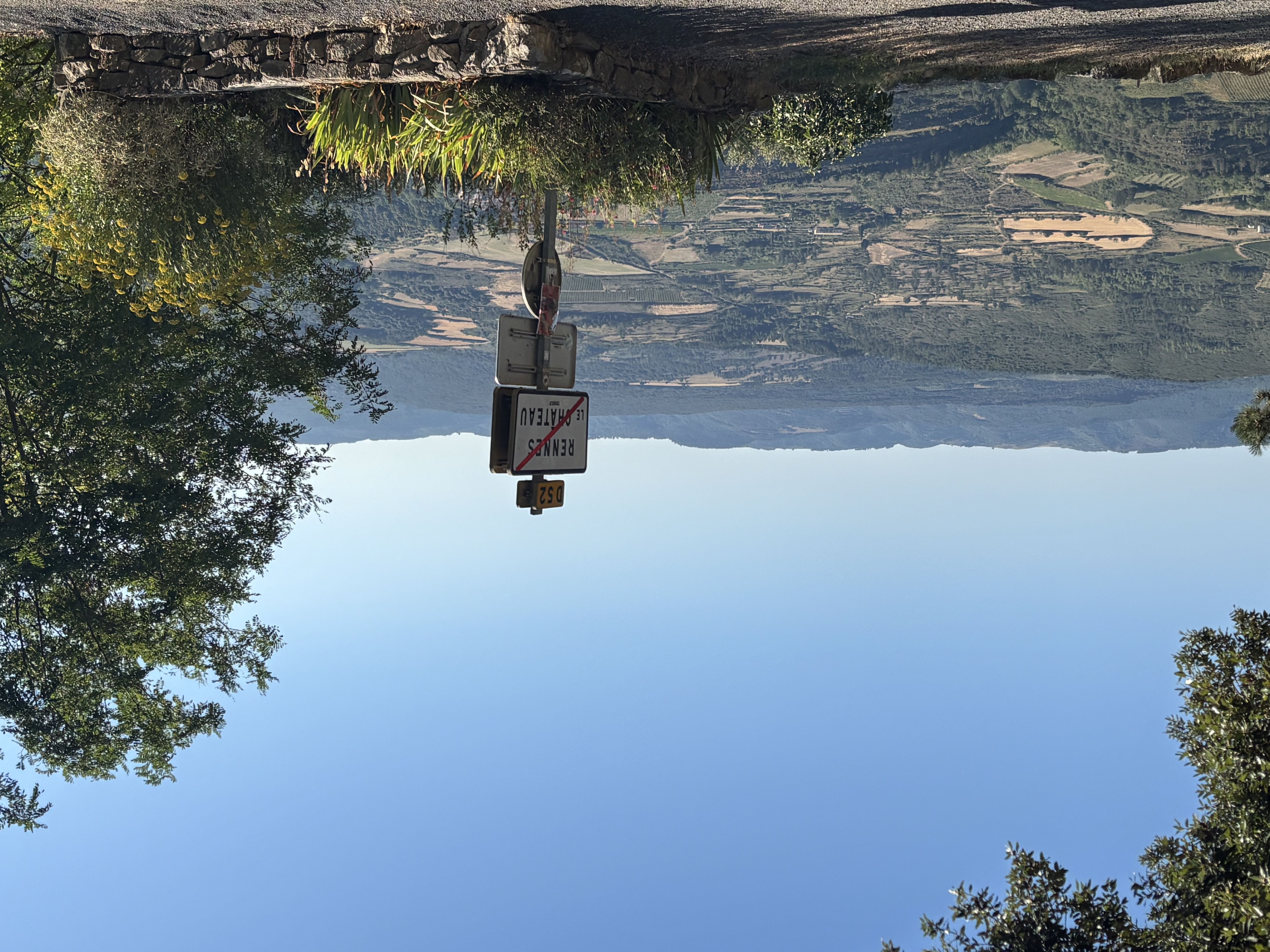
On the way out Bone spotted the Tower where many of the Cathars met their fate. The Pope and the French King, showing “Christian tolerance” conducted a siege of Montségur (May 1243 – 16 March 1244) that took place during the Albigensian Crusade in the castle ruins above. It pitted the royal forces of Louis IX of France and those of the bishops of Albi and Narbonne against the forces of Pierre Roger de Mirepoix, who protected a community of Cathars in Montségur.
The castle surrendered after a nine-month siege. About 210 Cathars were burned in a bonfire at the foot of the mountain on 16 March 1244. The moral of the story, if French Catholics invite you to a bar-be-que, don’t go! With enough religious historical intrigue, Mike and Bone drove the hour and a half to the first French Mediterranean Roman site, Narbonne!
Not Much in Narbonne!
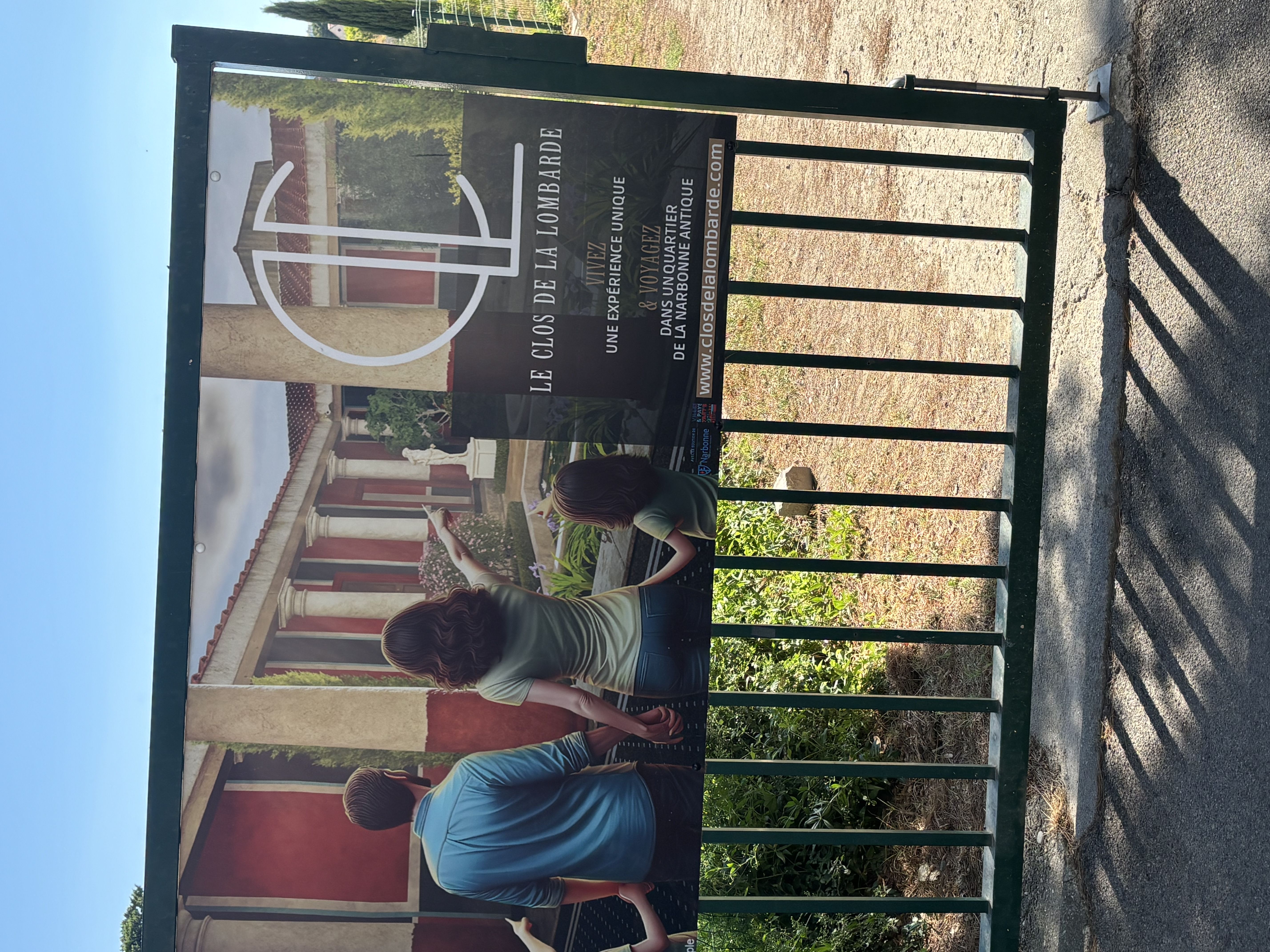
Getting back down to the coast put the temperature back into the high 90's as Mike and Bone got into Narbonne around 11:30. Narbonne Narbonne is famous for being the first Roman colony founded in Gaul (outside Italy), but why this spot?
The ancient city of Narbonne was established in Gaul by the Roman Republic in 118 BCE, as Colonia Narbo Martius, colloquially Narbo, and made into the capital of the newly established Roman province of Gallia Transalpina. It was located on the Via Domitia, the first Roman road in Gaul, built at the time of the foundation of the colony, and connecting Italy to Spain. Geographically, Narbonne was therefore located at a very important crossroads because it was situated where the Via Domitia connected to the Via Aquitania, which led toward the Atlantic Ocean through the cities of Tolosa and Burdigala.
Politically, Narbonne gained importance as a competitor to Massilia (today Marseille). Julius Caesar settled veterans from his 10th Legion there and attempted to develop its port, while Massilia was supporting Pompey. Among the products of Narbonne, its rosemary-flower honey was famous among Romans.
Later, the Roman province of Gallia Transalpina was renamed Gallia Narbonensis after the city, which became its capital. Seat of a powerful administration, the city enjoyed economic and architectural expansion. At that point, the city is thought to have had 30,000–50,000 inhabitants and may have had as many as 100,000. It remained an important Roman city, till 462 AD when the city was taken over to the Visigoths.
Mike et Bone Découvrez Le Clos de la Lombarde !
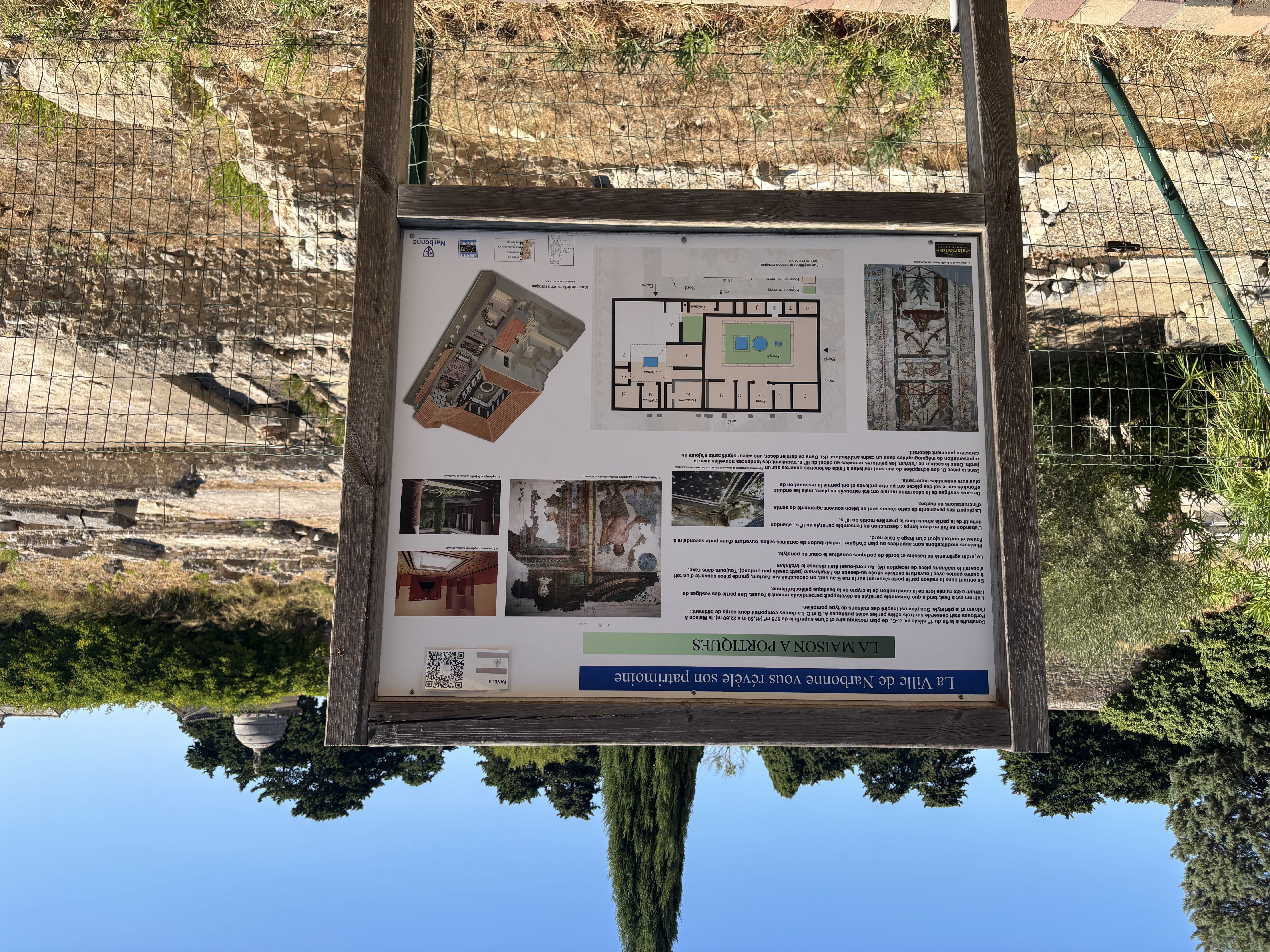
Ah the French! Ya just gotta love the fact that they have a complex on the English Language! Pretty much anywhere in the world, (for example Spain!) there is usually English versions of signs. NOT in Narbonne's Le Clos de la Lombarde. The Vestiges archéologiques du Clos de la Lombarde first became known in 1910 with the discovery of two sarcophagi, and extensive excavations began in 1973 and 1974 by archaeologists Raymond and Maryse Sabrié. It is a great example of a major Roman residential neighborhood featuring remnants of ancient homes, streets, workshops, and thermal baths. Today it is a casual walkable archeological site, Mike and Bone “paid” the entrance fees (sort of!) and walked around for half an hour checking out the bare bone site.
Roaming Roman Homes!
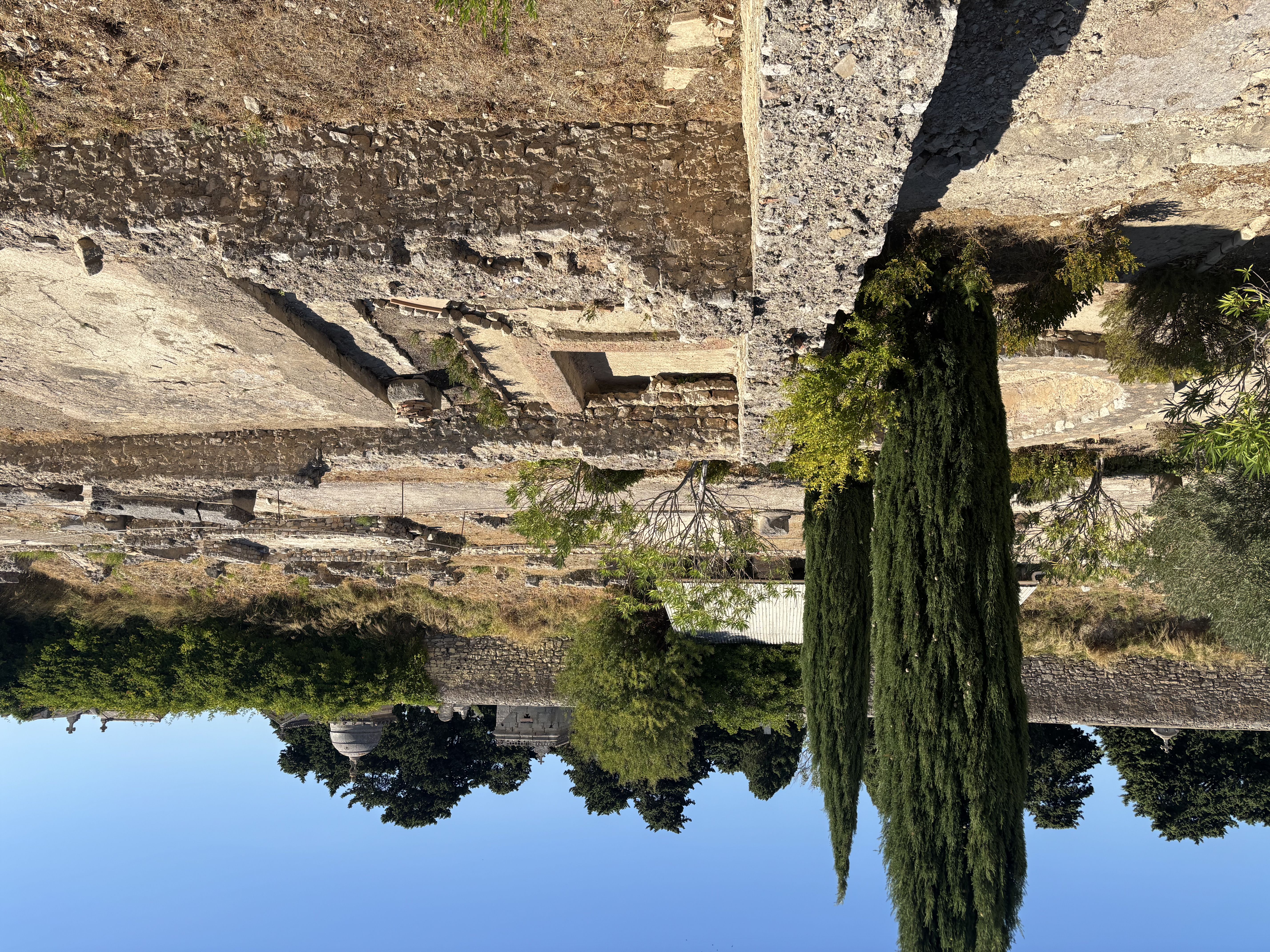
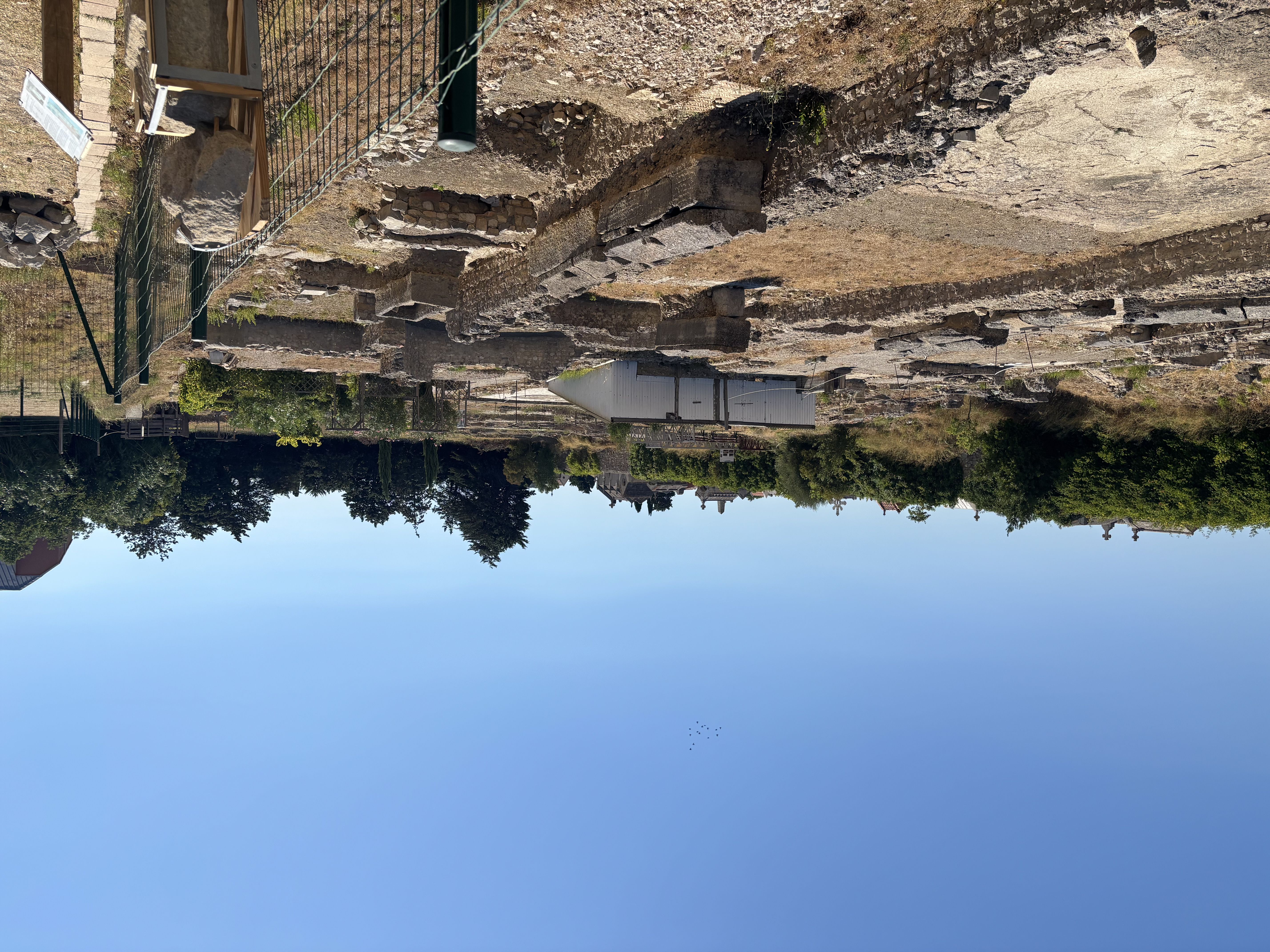
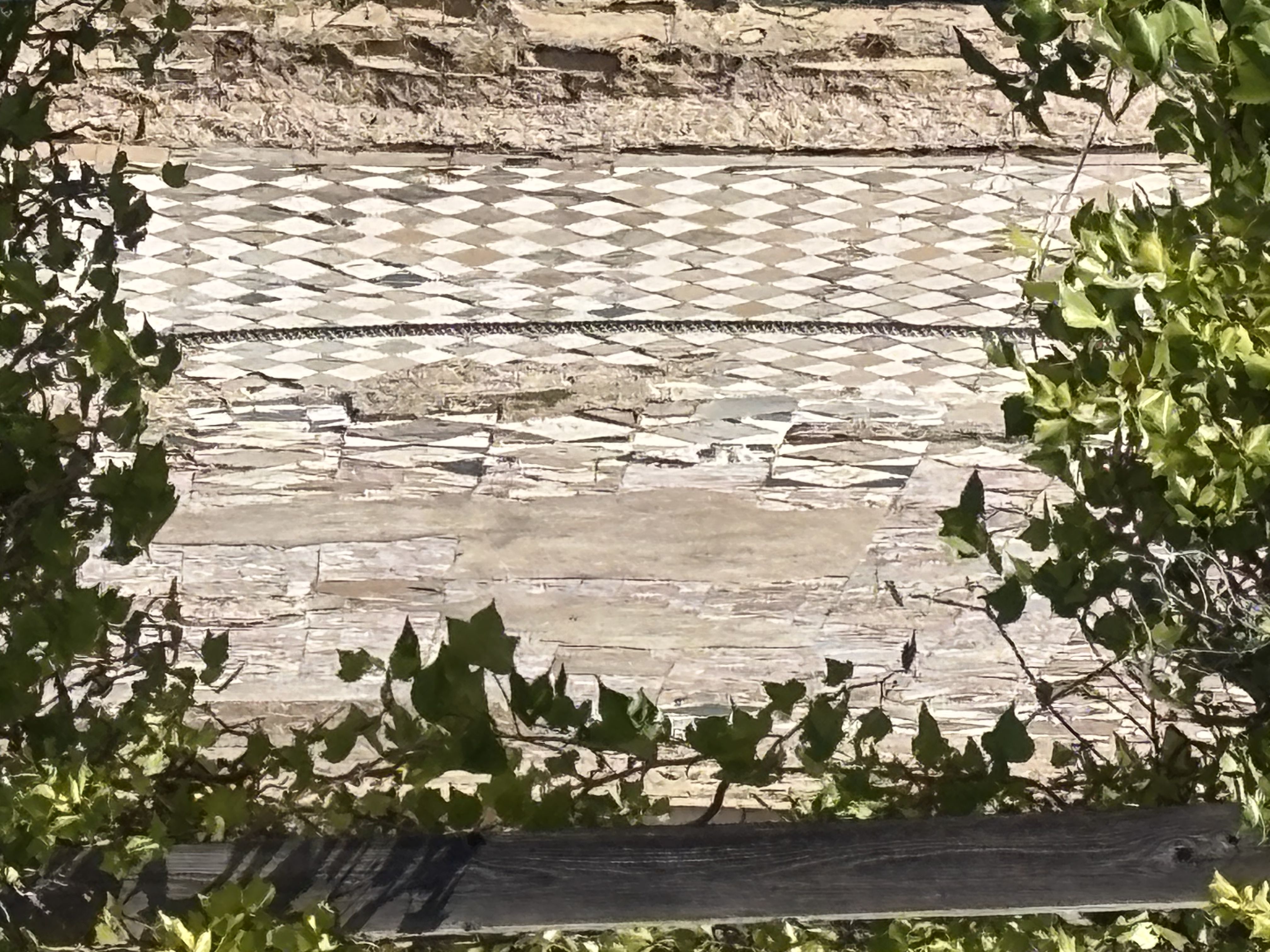
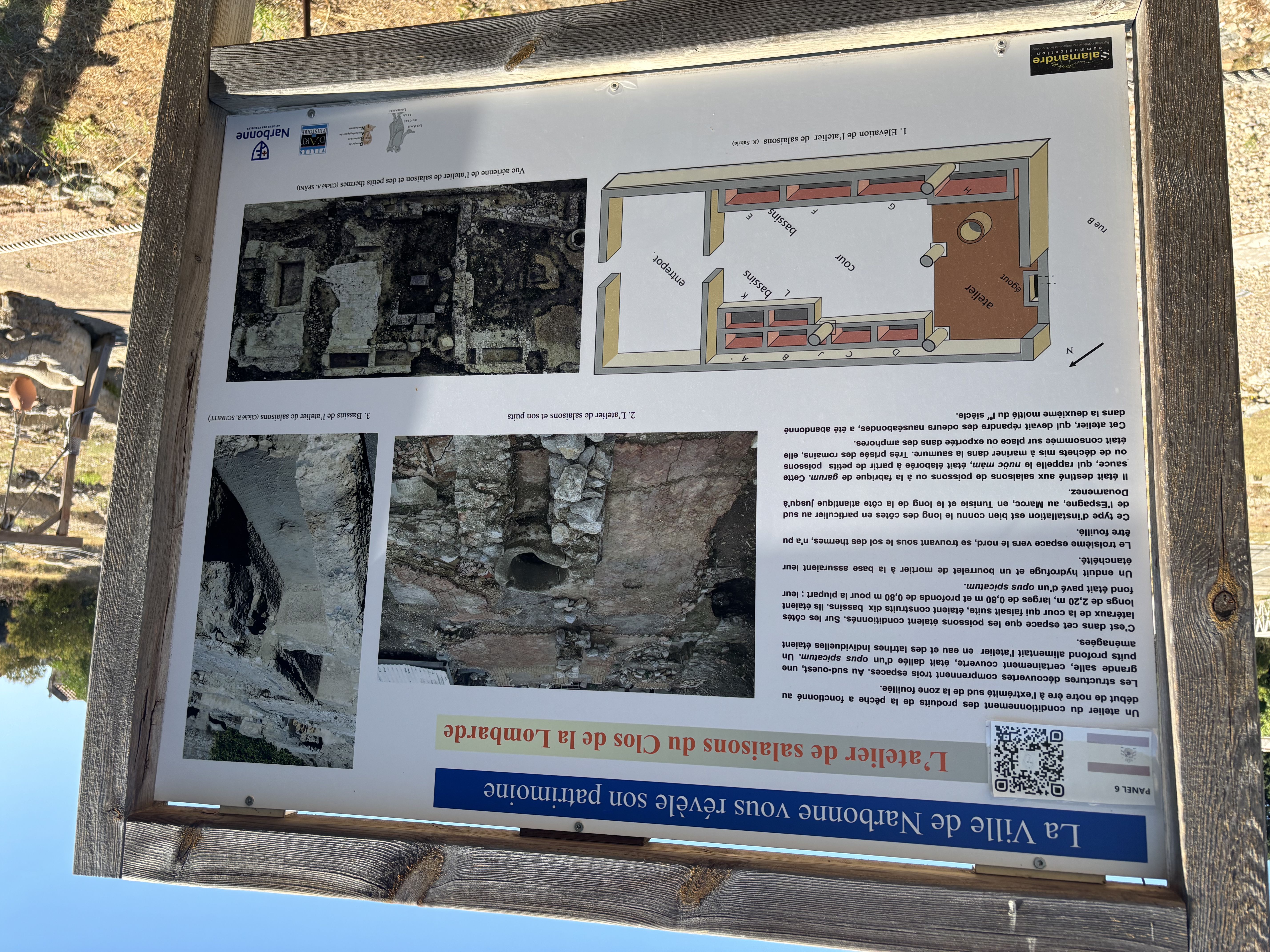
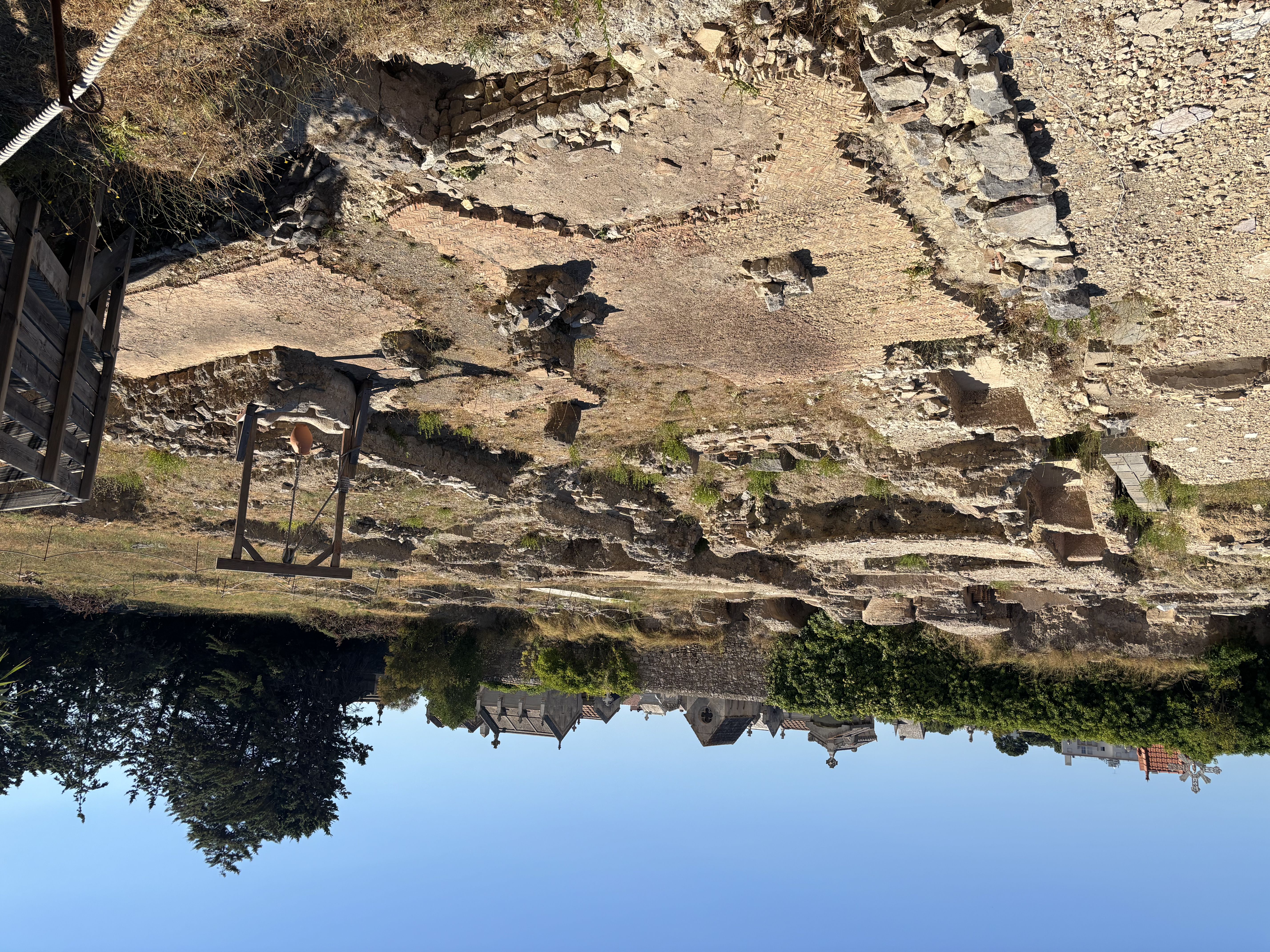
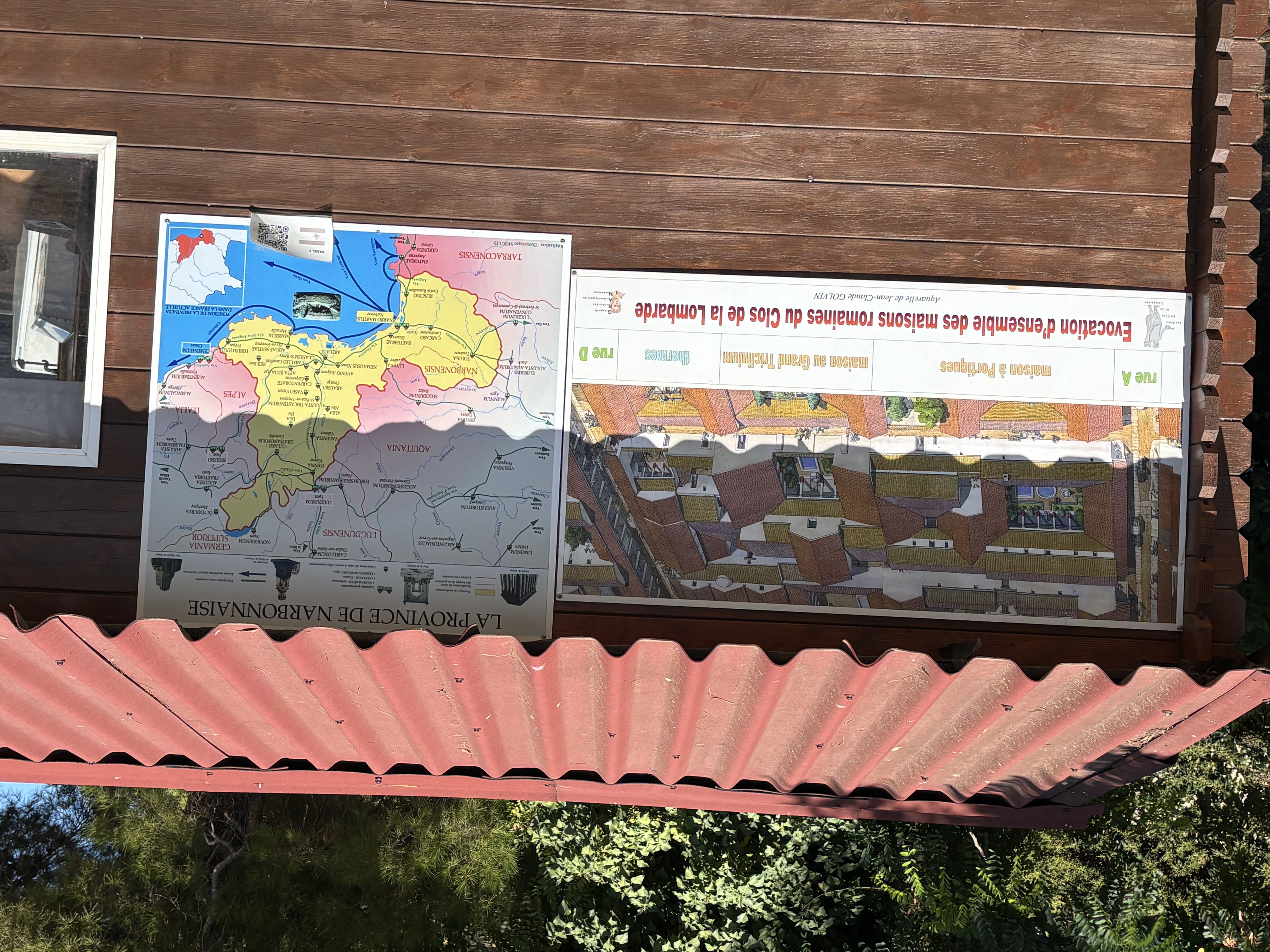
One Pissed off Frenchman!!! As Mike and Bone strolled back to the rental car, some beet-red, highly irritated Frenchman ran up to the car raving in high French (or low French since he was mad!) After a few minutes Bone went back to figure out what was the problem. Turned out Bone accidently paid for a book with a Tunesian 20 vs. a 20 Euro! The woman that Bone paid thought it was funny, the Frenchman, not so much, he continued to curse at the Boys as they smiled and left! Gotta love the French! Next stop drive down the road into downtown, to see a road!?!
Mike and Bone, checking out the Via Domitia
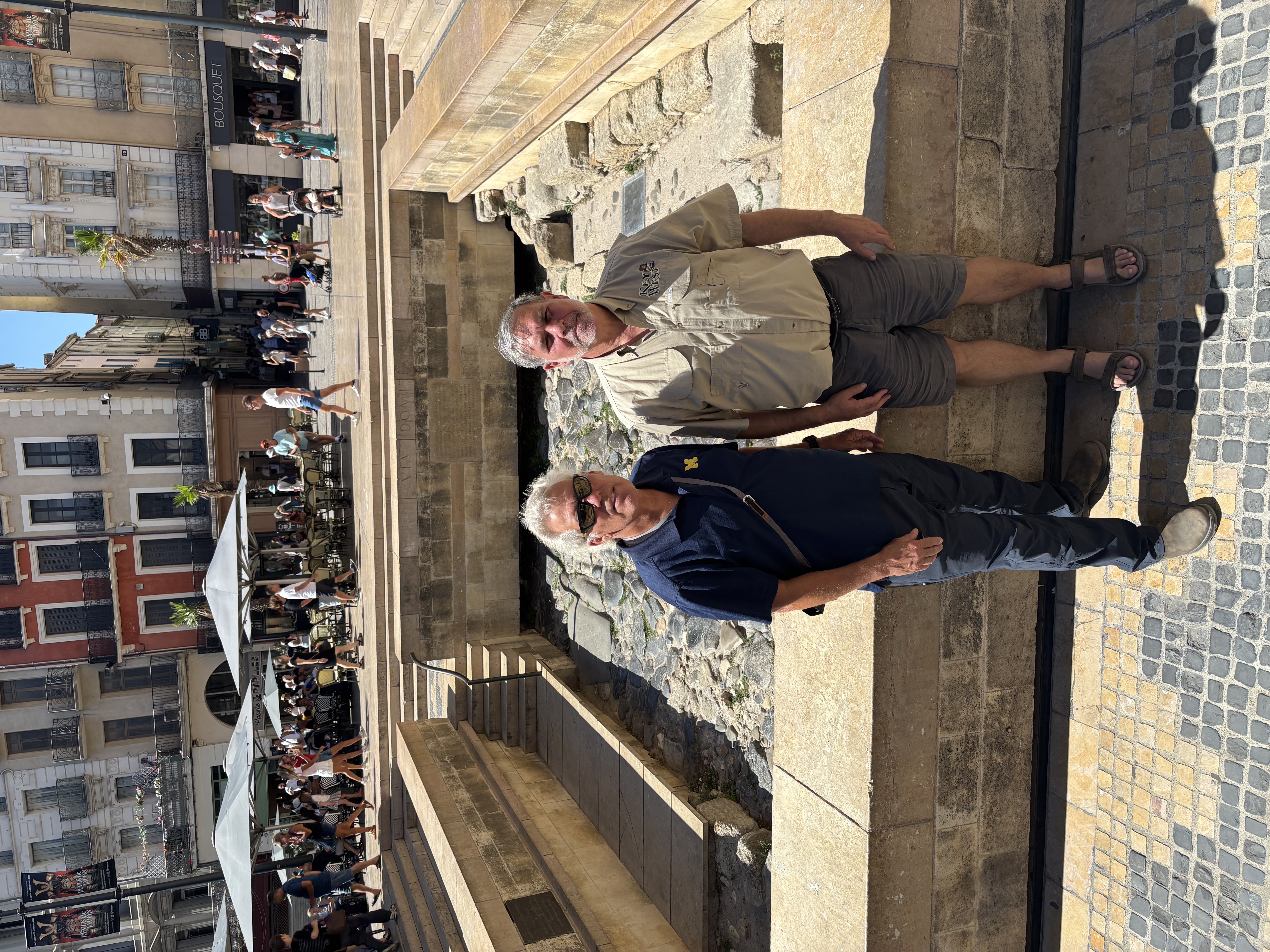
Mike and Bone found downtown Narbonne beautiful, but mostly medieval gothic. They struggled to find parking, which left them with aw 20 minute walk in the midday heat to their Roman objective, the Via Domitia! The Via Domitia was the first Roman road built in Gaul, to link Italy and Hispania through Narbonne, and across what is now Southern France.
The construction of the road was commissioned by Gnaeus Domitius Ahenobarbus ( hence, the name!), following the defeat of the Allobroges and Averni by himself and Quintus Fabius Maximus Allobrogicus in 122 BCE. Domitius also established a fortified garrison at Narbonne on the coast, near Hispania, to guard construction of the road. It soon developed into a full Roman colony of Narbonne!
Crossing the Alps by the easiest passage, the Col de Montgenèvre (1850 m), the Via Domitia followed the valley of the Durance, crossed the Rhône at Beaucaire passed through Nîmes (Nemausus) then followed the coastal plain along the Gulf of Lion. At Narbonne, it met the Via Aquitania (which led toward the Atlantic Ocean through Toulouse and Bordeaux). Thus Narbonne was a crucial strategic crossroads of the Via Domitia and the Via Aquitania, and it was an accessible, but easily defensible port at that time.
Mike and Bone, now on the Via Domitia!
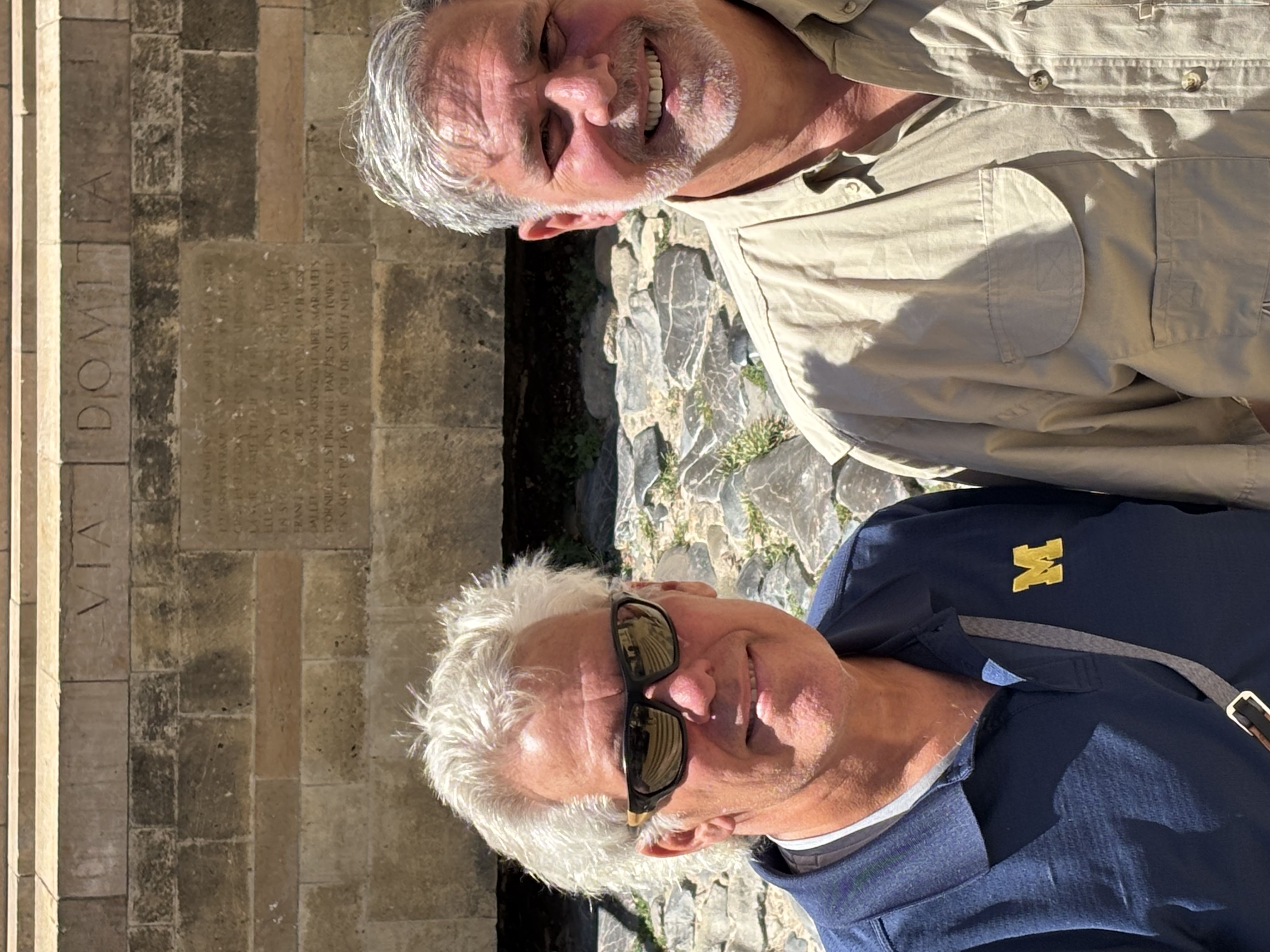
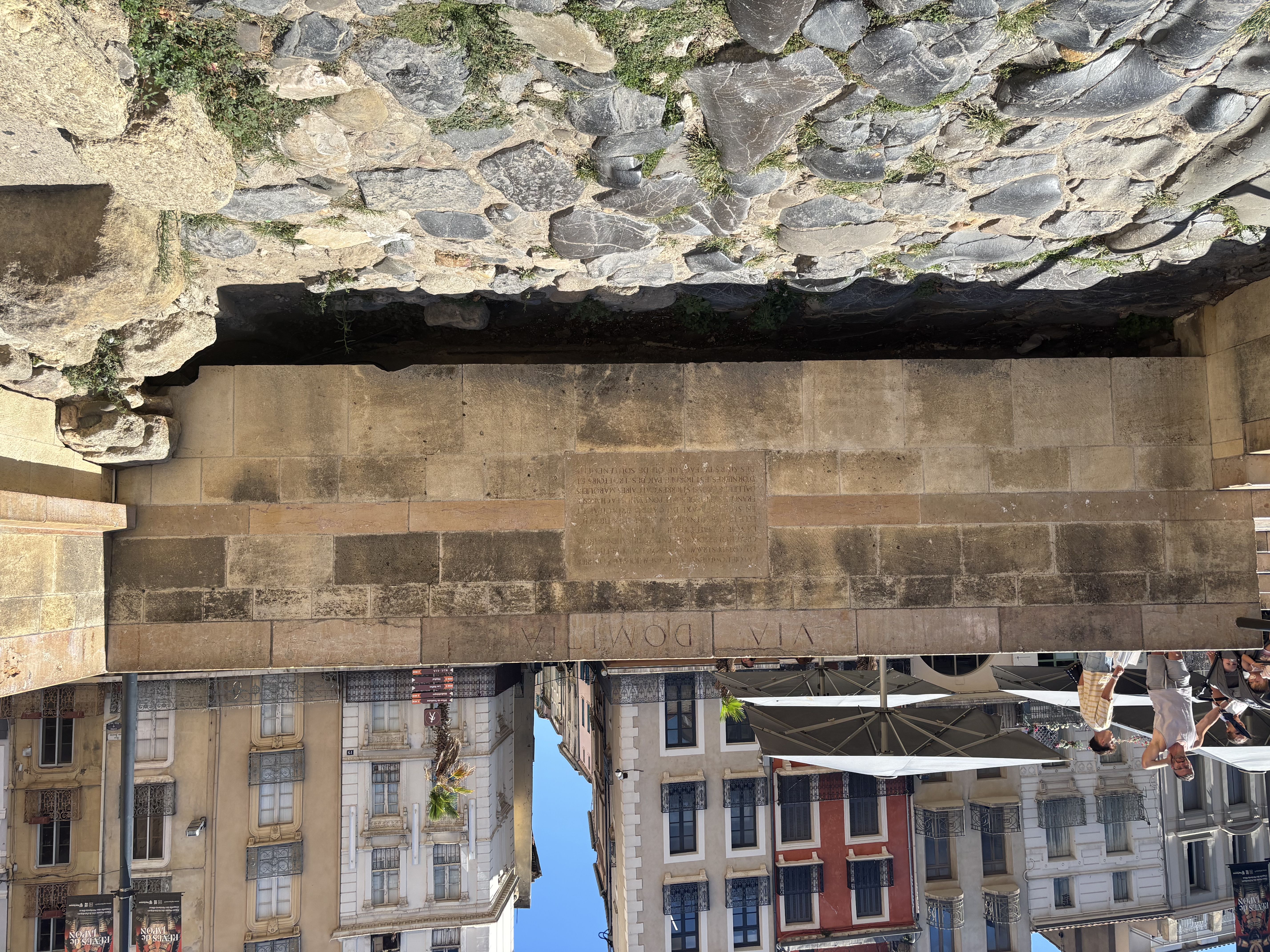
This "cusp point" in the Roman westwards expansion and ensuing supply, communication and fortification was a very important asset, and was treated as such (see Narbonne). In between the cities that it linked, the Via Domitia was provided with a series of mansiones at distances of a day's journey for a loaded cart, at which shelter, provender and fresh horses could be obtained for travelers on official business.
Unfortunately, in 2026, most of the Via Domitia is covered over by the Medieval Narbonne Town Square! Finding the Roman road is a 5 by 10 yard open spot in the cobblestones, which you can walk down to the Roman road level! With no marker, it was a VERY quick visit.
Medieval Narbonne!
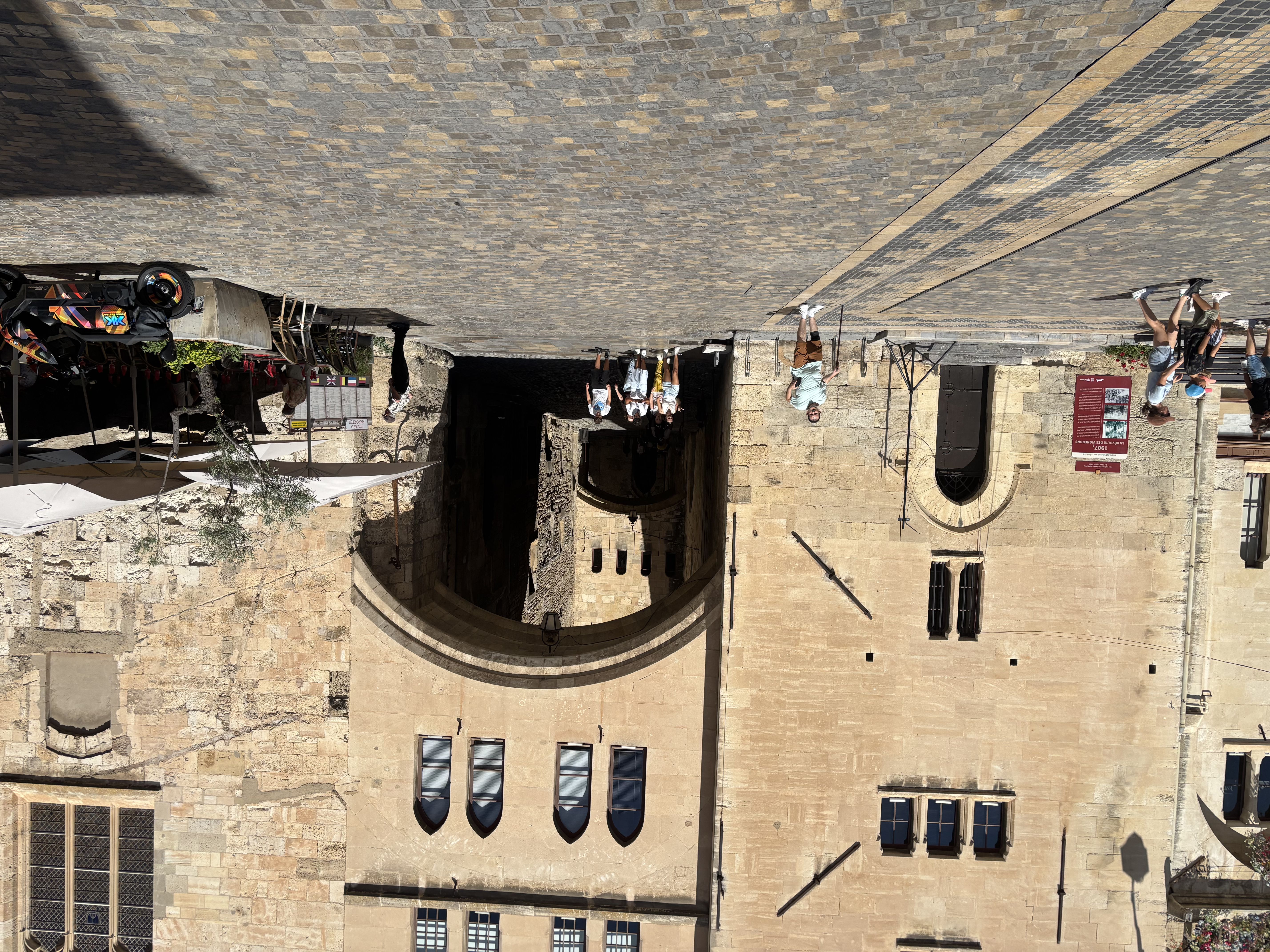
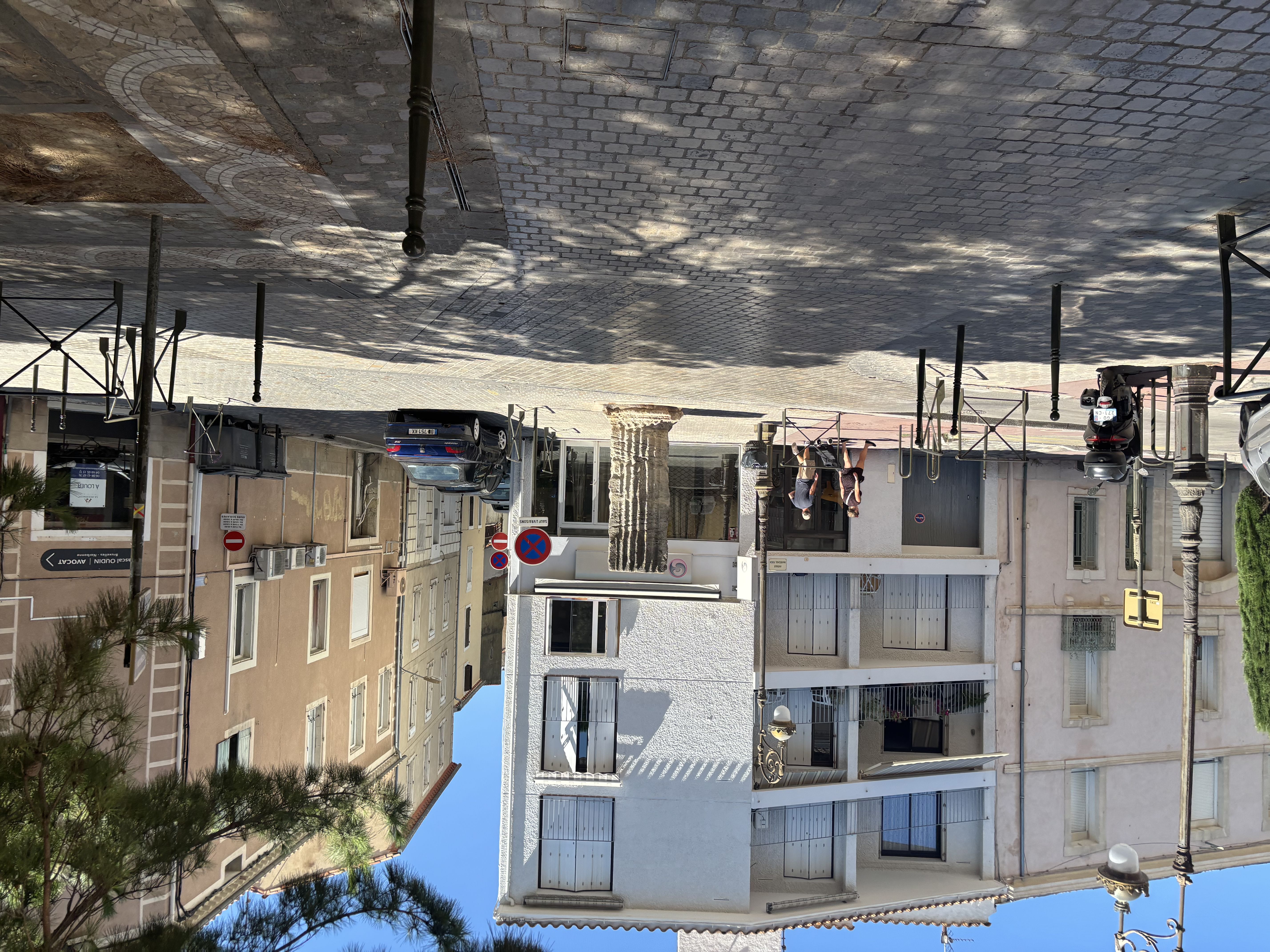
On the way back to the car Mike and Bone walked by the Roman Museum known as the "Horreum."
"No,the Horreum is not that kind of place!"
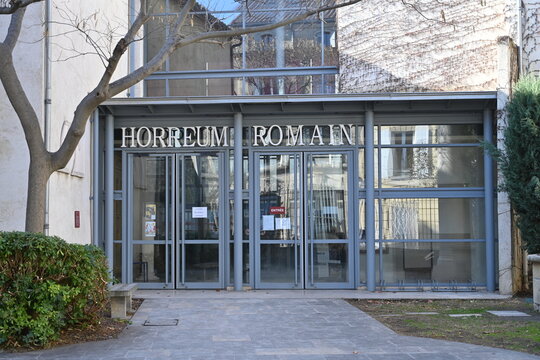
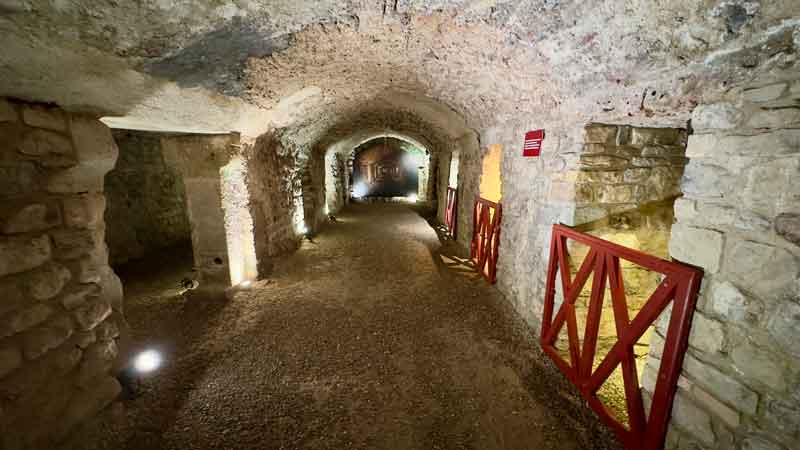
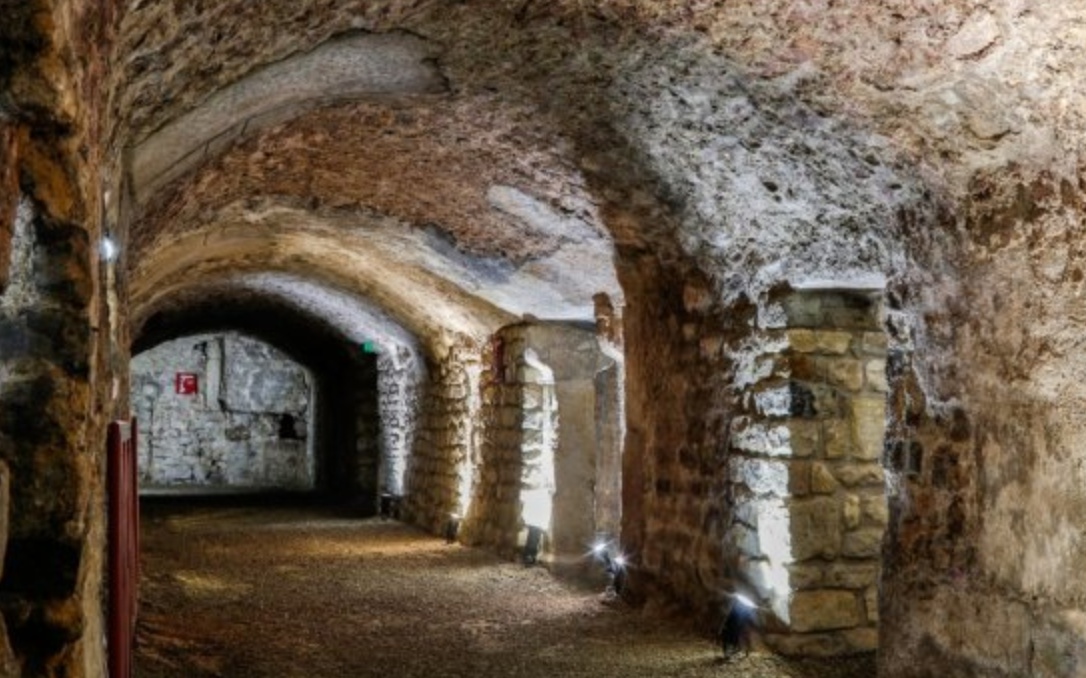
On the way back to the car Mike and Bone walked by the Roman Museum known as the "Horreum".
The Horreum dated back to the first century BC and are a network of subterranean tunnel and passageways which were thought to have been used as storage rooms during the Roman era.
Although the Latin term is often used to refer to granaries, Roman horrea were used to store many other types of consumables; the giant Horrea Galbae in Rome were used not only to store grain but also olive oil, wine, foodstuffs, clothing and even marble.
The French as made the Horreum a interactive Museum that consists of several galleries, and cellars of various sizes. This complex is at some 20 feet below street level, and has recently been made more accessible with an entrance hall that can be used for audiovisual presentations.
The walls, very well preserved, are evidence of the general architectural expertise and know-how of the ancient Romans. It is the only Roman monument that still remains at Narbonne. Unfortunately for the Boys it closes at 1:00 PM for lunch and since they showed up at 1:03 the were told (by a very snotty french woman) that they needed to come back in a hour, an hour the really did not have!
Fortunately, they were able to take a few pics and really got 80% of it, smiled, bid the bitch adieu, and headed north in the car to nicer Nimes!
The Nectar of Nimes!
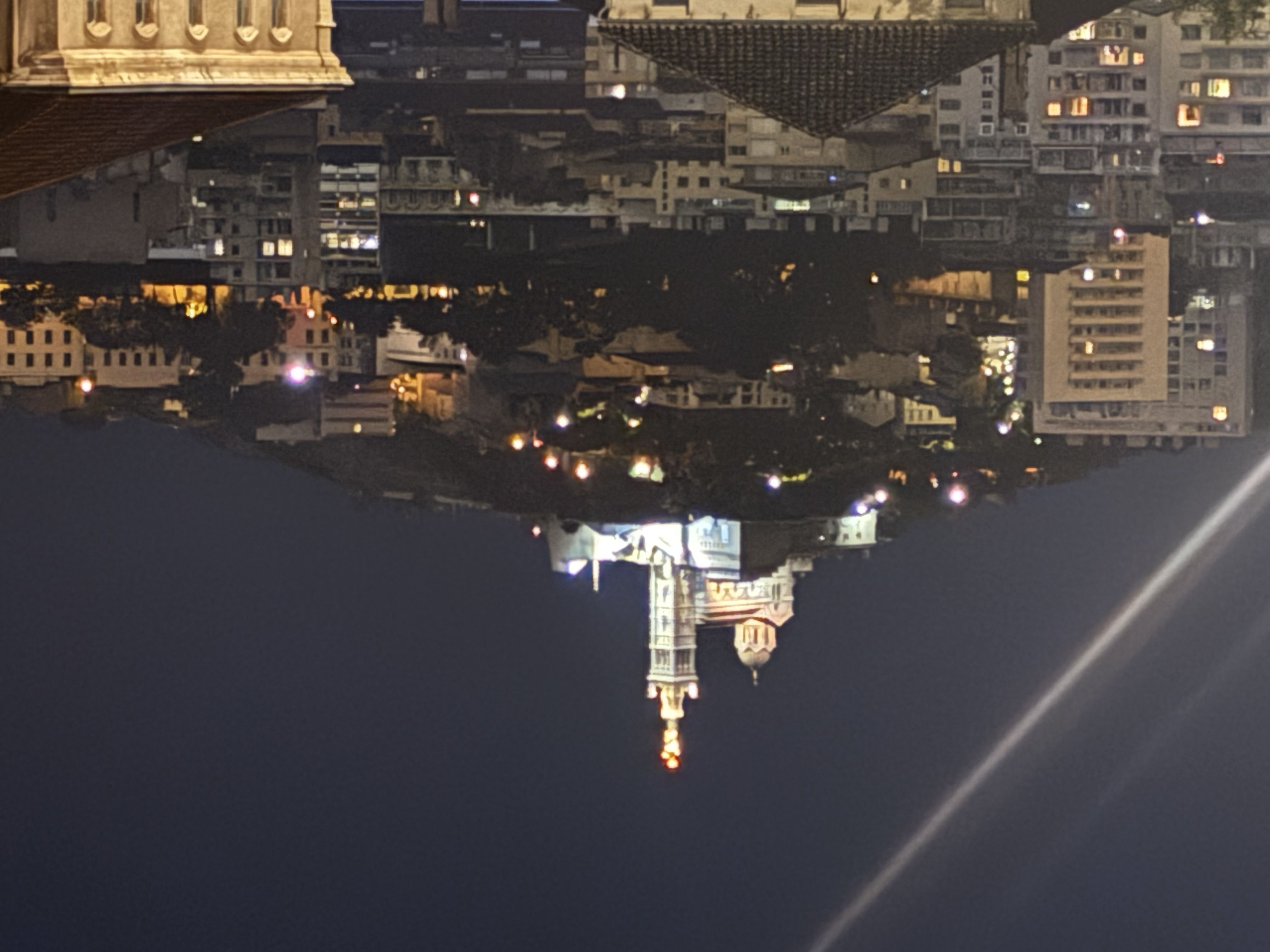
Marseille at Night!